Whipple's Procedure (Pancreaticoduodenectomy) in Lucknow
The Whipple's procedure (pancreaticoduodenectomy) is the specialist operation used to treat cancers of the head of the pancreas and the nearby 'periampullary' region. It is among the most complex operations in surgery — and, performed in an experienced, high-volume centre, it offers a genuine chance of cure for suitable patients.
Dr Sandeep Kumar Verma performs the Whipple's procedure in Lucknow at Medanta, including a fully robotic approach where appropriate, within a complete hepatopancreatobiliary programme.
In short
The Whipple's procedure (pancreaticoduodenectomy) in Lucknow is performed by Dr Sandeep Kumar Verma at Medanta, Lucknow. It is a complex operation for tumours of the pancreatic head, bile duct and duodenum that removes and reconstructs several organs. Dr Verma performs it via open and fully robotic approaches within a multidisciplinary HPB and cancer team.
What the Whipple's procedure involves
The operation removes the head of the pancreas together with the adjoining part of the small intestine (duodenum), the lower bile duct and the gallbladder, and sometimes part of the stomach. The digestive system is then carefully reconstructed so that bile, pancreatic juice and food flow normally again. It is demanding surgery that depends on precision and experience.
Why centre and surgeon experience matter
The safety of the Whipple's procedure is closely linked to how often a surgeon and centre perform it, and to the support available for recovery — intensive care, interventional radiology and endoscopy. Operating within a high-volume, fully equipped centre is what allows this major operation to be carried out safely with good outcomes.
A robotic option
Dr Verma has led the transition of the Whipple's procedure to a fully robotic platform for suitable patients. The robotic approach can offer the precision of open surgery through smaller incisions, with the potential for a smoother recovery — always chosen on the basis of what is safest for the individual.
Surgery within a complete plan
The Whipple's procedure is one part of a treatment plan agreed in a multidisciplinary tumour board, frequently combined with chemotherapy. Recovery is supported within a high-dependency setting, with close attention to nutrition and a structured follow-up.
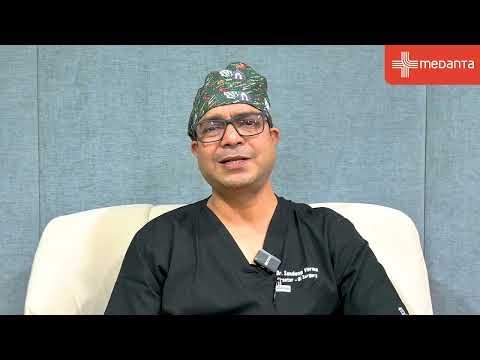
Watch: the Whipple's procedure explained
Dr Sandeep Kumar Verma explains what the Whipple's procedure (pancreaticoduodenectomy) involves and when it is needed — on the official Medanta channel (in Hindi).
Your treatment pathway
- 1
Specialist assessment
High-resolution CT/MRI and tumour-board planning define the operation.
- 2
Optimisation
Jaundice and nutrition are addressed where needed before surgery.
- 3
Whipple's procedure
Open or robotic pancreaticoduodenectomy with careful reconstruction.
- 4
Intensive recovery
High-dependency care, nutrition support and structured follow-up.
Whipple's Procedure: common questions
Is the Whipple's procedure very risky?
It is major surgery, but in experienced hands and a high-volume centre it is performed safely with good outcomes. The keys to safety are specialist hepatopancreatobiliary expertise and a hospital equipped to support complex recovery — the setting in which Dr Verma operates.
Can the Whipple's procedure be done robotically?
Yes, for suitable patients. Dr Verma has led the transition of the Whipple's procedure to a fully robotic platform, which can offer the precision of open surgery through smaller incisions. The approach is always chosen on the basis of what is safest and most effective for the individual.
Considering whipple's procedure?
Book a consultation with Dr Sandeep Kumar Verma for a clear assessment and a treatment plan tailored to you.